
Companies got a big tax cut in 2019. Their profits have since soared, but salaries and hiring have not kept up. Last week the Prime Minister said so to industry’s face. Here’s what the numbers show, and what it could mean for your pay.
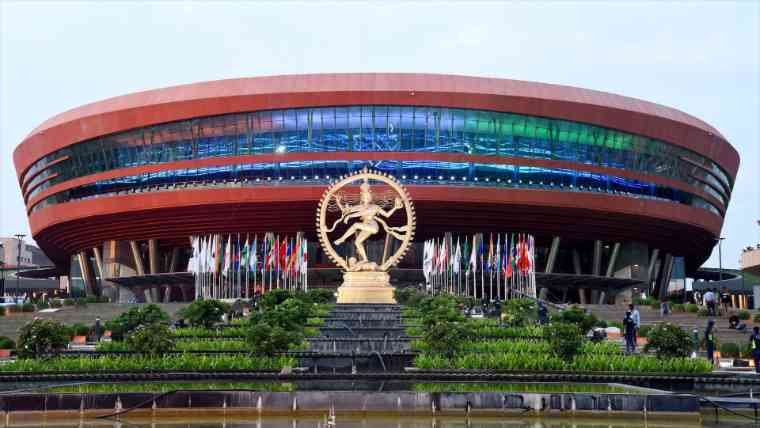
The hall at Bharat Mandapam in New Delhi was full of the most powerful people in Indian business. More than 2,500 delegates had come for FICCI’s centenary annual meeting on 19 November, according to the government. Most of them were expecting the usual pep talk about India’s growth story.
They got something else.
Prime Minister Narendra Modi reminded them that the government had cut the basic corporate tax rate from 30% to 22%. Then he turned to the audience with a question.
“Did you increase the salaries of your employees? Did you increase the number of employees? No,” he said, according to the official English rendering of the speech, which he gave in Hindi. The attitude, he added, remained: “Modi ji, you do it, we will see.”
He even predicted the room’s reaction. “I know you will not clap,” he said, “because however much one gives, your appetite never seems to be satisfied.” The response was polite applause, The Federal reported.
It was an unusually blunt message from a prime minister to India Inc. And for millions of salaried Indians, it was a question they have been asking for years.
What the tax cut was
The cut came in September 2019. Existing companies were allowed to pay tax at a base rate of 22% instead of 30%, if they gave up certain exemptions and deductions. Including surcharge and cess, that works out to about 25.17%, Business Today noted. New manufacturing companies were offered an even lower base rate of 15%.
The idea was simple. Pay less tax, and companies would have more money to invest, build factories, hire people and pay them better.
In his speech, Modi also listed what ordinary taxpayers had received. “Today, there is no income tax on earnings up to ₹12 lakh in India,” he said, adding that tax refunds that once took eight months now arrive within a week. His point was that the government had done its part for both business and workers. In his view, business had not done its part in return.
What the numbers say
Broadly, the data backs him up. Profits did take off. The government’s own Economic Survey 2024-25 found that corporate profits rose 22.3% in 2023-24, while employment grew just 1.5%, NewsGram reported.
Pay has moved far more slowly. Salaried workers’ wages have grown about 6.2% a year since 2019, according to CMIE data cited by The Week. Retail inflation was 6.09% in October 2026. So for many people, a typical raise barely keeps them where they were.
And the gains have not been shared evenly inside companies either. A Mint study of BSE 500 companies, also cited by The Week, found that top executives’ pay rose about 40% in 2025-26. The median employee’s pay rose about 1%.
These studies measure different things, so the numbers can’t be stacked neatly side by side. But they point the same way: profits raced ahead, and paychecks did not follow.

Why companies haven’t raised pay
Industry has not answered publicly. FICCI’s own press release summarised the speech but did not respond to the criticism, and we found no public reply from major industry bodies by Sunday.
Economists say the reasons are more complicated than greed. Santosh Mehrotra, a visiting professor at the University of Bath, told The Federal that companies invest and hire when they see demand in the economy, not because they are asked to. In other words, a factory owner won’t add a shift unless people are buying more of what the factory makes.
Economist Mitali Nikore pointed to a design flaw. The government’s production-linked incentive (PLI) schemes were tied to employment targets, she noted, but the 2019 tax cut came with no such condition. Companies could take the lower rate and simply keep the savings.
There is a circle here that worries economists. If wages stay flat, people spend less. If people spend less, companies see weak demand and hold back on hiring and raises. Some commentators, including The Week, read the speech as a warning ahead of the next Budget: industry should not expect fresh tax breaks unless it shows more hiring and higher pay.
What it means for you
Nothing changes by law. The PM’s remarks are public pressure, not a new rule, and no company is required to raise salaries because of them.
But they do give you something useful if you are heading into an appraisal. It is now said openly, at the very top, that many companies’ profits have grown much faster than pay. If your company has posted strong results, that is a fair point to raise.
It also helps to judge your raise against inflation. With prices rising around 6% a year, a hike below that means your real income has actually fallen. Only a raise above it puts you ahead.
And make sure you are getting the tax relief that already exists. If you earn up to ₹12 lakh and use the new tax regime, you should pay no income tax. Check that the TDS on your payslip reflects that.
The bigger test comes in the Budget. If the government starts linking business incentives to jobs and wages, that is where a speech could turn into real change in your pay packet.
For now, the Prime Minister has asked the question out loud. The answer is up to India Inc.
Sources
- PIB: English rendering of PM’s address at FICCI AGM (19 November 2026)
- PIB: PM to inaugurate FICCI AGM and Annual Convention (18 November 2026)
- FICCI: Press release on the PM’s address (19 November 2026)
- Business Today: PM’s warning to India Inc; 2019 tax cut details (19 November 2026)
- The Week: India Inc’s profit growth and the full picture (CMIE, Mint data) (20 November 2026)
- The Week: PM Modi blasts India Inc (20 November 2026)
- NewsGram: PM’s FICCI speech and Economic Survey data (20 November 2026)
- The Federal: Economists on Modi’s pitch to India Inc (21 November 2026)
Read next



Discover more from Khabar Mitra
Subscribe to get the latest posts sent to your email.