
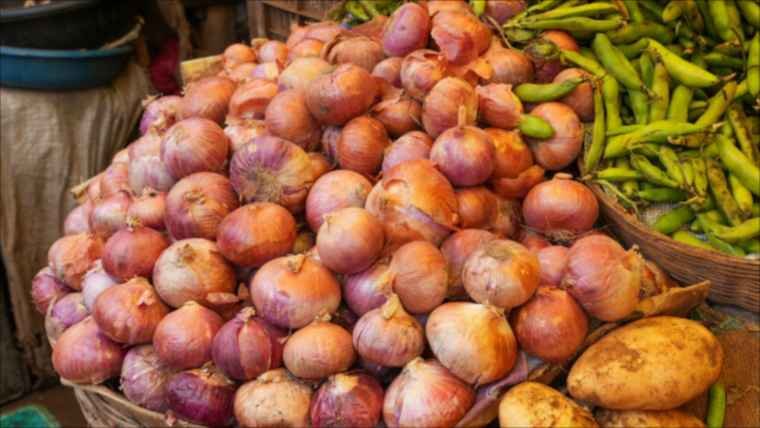
Onions cost more than twice what they did a year ago. Rice, cooking oil, eggs and dal have all crept up. This week, the rating agency S&P Global warned that food prices in India are likely to keep rising into next year. Here is why your kitchen bill is climbing, what the government is doing, and when relief might come.
Ask anyone who shops for a family and they will tell you the same thing. The weekly vegetable bag costs more, and the money runs out sooner.
The official numbers now say so too. India’s retail inflation rose to 6.09% in October, up from 5.54% in September, according to the statistics ministry. That is a two-year high, and it is above the 6% upper limit the Reserve Bank of India (RBI) is supposed to keep inflation under. Food inflation was even higher, at 8.94%.
What has become costlier
The biggest culprit is the onion. Its price in October was 116% higher than a year earlier, the steepest rise of any item in the index. On 12 November, onions were selling at an average of about ₹54 a kg across the country, against about ₹27 a year before. Sugar was about ₹60 a kg, up from roughly ₹47.
Garlic was up 61% on a year ago, ginger 48% and lemons 47%. Eating out has also become pricier: inflation for restaurants and hotels crossed 10%.
Local markets tell the same story. In Chennai’s Koyambedu market, shallots, the small onions used in sambar, jumped from ₹150 to ₹220 a kg in a single day last week, as daily arrivals fell to about 60 tonnes from a normal 160. In Hyderabad, traders told a local paper that rice has risen 15 to 20% in about six weeks, sunflower oil has gone from under ₹160 a litre to over ₹180, and an egg that cost ₹5 or ₹6 now costs ₹7 or ₹8.
There is some good news. Potatoes were 14% cheaper than a year ago in October, and cauliflower 11% cheaper.
Why food inflation is rising
The short answer is the weather. This year’s monsoon ended about 13% below normal, by some measures the weakest since 2015, as El Niño, a warming of the Pacific Ocean that tends to weaken Indian rains, took hold. Parts of Karnataka, Andhra Pradesh and Maharashtra saw drought, while uneven October rain in the north and east damaged crops that were ready for harvest.
Then there are costs that have nothing to do with rain. Conflict in West Asia has kept crude oil expensive, which pushes up the price of diesel, transport and fertiliser. All of that ends up in what you pay at the shop.
Rural India is feeling it more. Food inflation was 9.09% in villages and 8.68% in cities, and the squeeze is sharpest for families who spend most of their income on food. Overall inflation in villages was 6.63% in October, against 5.41% in cities. By state, prices rose fastest in Puducherry, Andhra Pradesh, Madhya Pradesh, Odisha and Karnataka, all above 7%. Delhi was among the lowest, at 3.8%.
Why food inflation may not ease soon
Normally, the winter (rabi) crop brings relief. This year it is off to a slow start. By 13 November, farmers had sown 11% less land than at the same point last year, according to agriculture ministry data. Wheat area was down 15%, gram (chana) 22% and mustard 8%. Sowing can still catch up, but reservoirs are lower than usual, and scientists at INCOIS, the government’s ocean information centre, put the chance of El Niño lasting through March 2027 at 85% to 98%.
That is why S&P Global Ratings, in its latest Asia-Pacific outlook, said food prices are likely to rise further, especially in India. It expects inflation to average 5.3% this financial year, which ends in March, and to cool to 4.7% next year. It still sees the economy growing about 7%, among the fastest in Asia.
What the government is doing
Rice is where the Centre has acted most. On 6 November it doubled the amount of government rice it will sell in the open market this year, to 50 lakh tonnes from 25 lakh tonnes, to push more grain into shops. Traders, wholesalers, big retailers and millers must now declare their rice stocks every Friday, a step meant to stop hoarding. Five southern states, Andhra Pradesh, Karnataka, Kerala, Tamil Nadu and Telangana, can put limits on how much rice traders hold until 31 January. More subsidised Bharat Rice is also being sent to NAFED, NCCF and Kendriya Bhandar outlets.
What it means for you
First, your grocery budget. Prices of onions, shallots and other vegetables usually ease once the new crop arrives, and traders in Chennai say the November-December shortage is partly seasonal. But with the winter crop behind schedule, it would be wise to plan for higher food bills for a few more months rather than a quick fall. Cheaper items such as potatoes and cauliflower can help balance the basket, and Bharat Rice outlets may save money where they are available.
Second, your loans. When inflation runs above 6%, the RBI tends to raise interest rates to cool it. S&P expects a 0.25 percentage point hike at the RBI’s December meeting and another early next year. If that happens, home and car loan EMIs linked to the repo rate would go up, while fixed deposit rates could rise a little too. We explained what a hike would mean for your EMI here.
The dates to watch
Three are coming up. On 30 November, the government releases GDP figures for July to September, which will show how the economy is holding up. In early December, the RBI announces its interest rate decision. And on 14 December, the statistics ministry publishes November’s inflation numbers, the first clear sign of whether the onion shock is fading.
Until then, the honest answer for most households is that relief is coming, but slowly, and much depends on how the winter crop turns out.
Also read: Will your home loan EMI go up? · India’s gold imports fall 40%
Sources
October inflation data: MoSPI press release, via DD News (item-wise, rural/urban, state figures, next release date) and Down To Earth (onion and sugar retail prices); S&P Global outlook via Rural Voice and Business Standard / PTI; rabi sowing: Rural Voice; monsoon, drought and El Niño outlook: Outlook Business; rice measures: Free Press Journal / IANS; local prices: DT Next (Chennai) and Metro India (Hyderabad).
Read next



Discover more from Khabar Mitra
Subscribe to get the latest posts sent to your email.
3 thoughts on “Onions up 116% in a year: why your kitchen bill keeps rising, and when it may ease”