
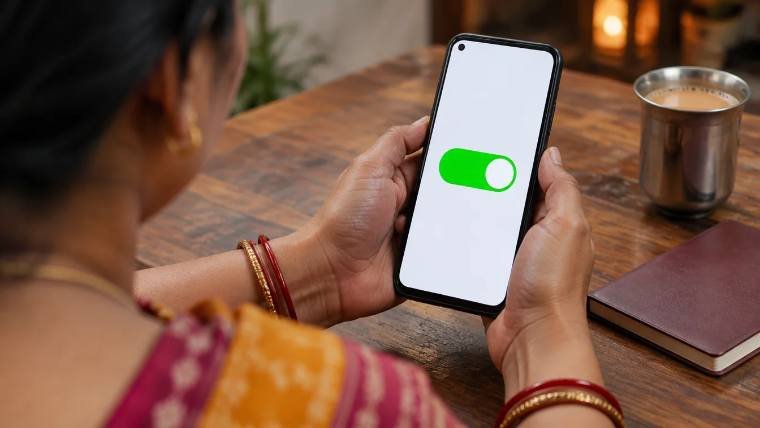
The Reserve Bank of India wants every bank to give you an RBI stop switch: one control that blocks all payments going out of your account the moment you suspect fraud. Its draft rules, released on 23 November, also let you name a “trusted person” who must approve large transfers, and they spell out when a fraud counts as the bank’s fault.
Why now? Online payment fraud has exploded. Complaints on the government’s cybercrime portal rose from 2.6 lakh in 2021 to 28 lakh in 2025, and the amount reported lost rose about 42 times, according to figures the RBI cited in an April 2026 discussion paper. The new draft is the RBI’s answer to that paper.
These are proposals, not final rules. The RBI is taking public comments until 14 December 2026, and most of the changes would only have to be in place by 1 July 2027. Below are the questions readers are most likely to have.
What exactly is the RBI stop switch?
It is a single control that turns off every payment you can start from your account: UPI, net banking, card payments and so on. The draft directions define it as a facility to “disable all customer initiated future debits” on your accounts.
Once it is on, no new payment mandates or standing instructions can be set up, and UPI cannot be registered on a new third-party app. That matters because many scams work by getting the victim to install an app or approve a new mandate.
Money can still come in. Your existing recurring payments, such as an SIP or an electricity bill mandate, keep running, and the bank can still recover loan EMIs and charges. To switch it off again you have to pass authentication at least as strong as the one used to turn the channel on, and banks may add a waiting period.
A facility through which a customer can disable all customer initiated future debits associated with her / his account(s).
RBI draft directions, November 2026
How would a “trusted person” protect my money?
You could name an adult you trust, such as a son, daughter or sibling, who has to approve any transfer above a limit you choose. The bank sends them the request and they have one hour to say yes. If they say no, or don’t reply, the payment is rejected.
It is voluntary. The trusted person must be 18 or older, use a different mobile number from yours, and be verified by the bank with an official ID. They get no access to your balance, deposits or investments and carry no liability. Setting it up, or changing the person or the limit, comes with a 24-hour cooling-off period so that a fraudster can’t rush the change through.
Take a worked example. A retired teacher gets a call from someone claiming to be a police officer, who tells her to move ₹2 lakh to a “safe account”. If she had named her son as trusted person with a ₹25,000 limit, a net-banking transfer of that size would go to him first. He could refuse, and the money would stay put.
Does the trusted-person check cover UPI?
No, and that is the biggest gap. The draft leaves out UPI, all payments to merchants, and recurring payments such as standing instructions, e-mandates and NACH debits. A fraudster who pushes the victim towards UPI would get around the trusted-person check.
Your own limits would still apply there, though. Banks would have to let you set per-transaction, per-beneficiary and daily limits on each channel, one overall daily cap, and a time window when payments stay off (say, midnight to 6 am). The RBI’s examples include ₹10,000 per transaction and ₹50,000 a day per channel, but you pick the numbers. Cards get their own switches for domestic and international use at ATMs, shops, online and contactless.
What changes when I open a new account or get a new card?
Under the draft, all digital payment channels would be off when you open an account, and would switch on only with your explicit consent and authentication. A new card would work only when inserted or swiped at ATMs and shop machines in India until you turn on other options.
For the first 24 hours after you activate a channel, the bank would cap how much you can send in total, based on its own risk check. Every change to your settings would trigger an SMS or email. New accounts are a favourite target: fraudsters often rent or open fresh accounts to receive stolen money, and these defaults make that slower.
When is a fraud the bank’s fault?
This is the part that could decide who pays when things go wrong. RBI’s rules already say customers shouldn’t bear losses caused by a bank’s own lapse, but “lapse” has been open to argument. The draft lists ten situations that count as negligence by the bank, including when it:
- doesn’t use the required authentication, or skips extra checks when a new payee is added or a limit is raised;
- fails to send the mandatory transaction alert;
- has no round-the-clock way to report fraud, or doesn’t act promptly when you report it;
- doesn’t block a channel after repeated failed logins;
- suffers a system failure or security breach, or its staff or vendors collude with fraudsters.
Most of this definition would apply from 1 January 2027. The clauses covering the new customer controls and the trusted-person facility would start with those features, from 1 July 2027.
How big is the fraud problem?
Our calculation from the RBI’s figures shows the average reported loss per complaint almost quadrupling in four years.
| Year | Frauds reported | Amount (₹ crore) | Average per complaint* |
|---|---|---|---|
| 2021 | 2.6 lakh | 551 | ₹21,200 |
| 2022 | 6.9 lakh | 2,290 | ₹33,200 |
| 2023 | 13.1 lakh | 7,465 | ₹57,000 |
| 2024 | 24 lakh | 22,848 | ₹95,200 |
| 2025 | 28 lakh | 22,931 | ₹81,900 |
The amount lost barely grew in 2025 even as complaints kept climbing, so smaller frauds became more common. It is too early to say whether that is a trend.
What can I do right now?
Most banks already let you switch cards on and off and set limits in their apps, so use them. Turn off international and contactless use if you never need them, and keep UPI limits close to what you actually spend. If you lose money, call the 1930 cybercrime helpline or report at cybercrime.gov.in, and tell your bank at once: the sooner you report, the stronger your claim. A good credit record is worth protecting too, since fraudsters sometimes take loans in victims’ names.
You can also comment on the draft. The RBI accepts feedback until 14 December through its Connect 2 Regulate page or by email.
The bottom line
The RBI stop switch and trusted-person check would give ordinary account holders, and older parents in particular, tools that today depend on which bank they use. The weak spot is UPI, where most everyday payments happen and the trusted-person check won’t apply. The final rules, after 14 December, will show whether the RBI closes that gap.
FAQ
Is the stop switch available in my bank app today?
Not as a single RBI-mandated control. The rules are still a draft; banks would have to offer it by 1 July 2027 at the latest, though they can start earlier.
Will the stop switch stop my SIP or loan EMI?
No. Existing mandates and standing instructions keep running, and the bank can still recover EMIs and charges. Only new payments you start are blocked.
Which banks do the rules cover?
The RBI issued separate drafts for commercial banks, small finance banks, payments banks, local area banks, regional rural banks and urban and rural co-operative banks.
Also read: How your CIBIL score is calculated · EMI calculator: what an RBI rate rise could do to your loan
Sources
RBI press release, “Draft Amendment Directions for Preventive Safeguards for Electronic Banking Transactions”, 23 November 2026; RBI draft Commercial Banks (Responsible Business Conduct) Fifth Amendment Directions, 2026; RBI discussion paper “Exploring safeguards in digital payments to curb frauds”, 9 April 2026, as reproduced by TaxGuru; coverage by Business Standard and MediaNama; reporting channels: National Cybercrime Reporting Portal.
Read next



Discover more from Khabar Mitra
Subscribe to get the latest posts sent to your email.