

Updated 21 November 2026 · Prices are India launch prices; check retailers for today’s deals · 7 min read
Xiaomi phones got noticeably more expensive in 2026, as rising memory-chip costs pushed prices up across the industry. But the company still has a phone at almost every price point, and some of them offer things rivals don’t: 9,000mAh batteries, 200MP cameras and flagship-class chips for under ₹35,000.
We went through Xiaomi’s 2026 line-up across its three brands (Xiaomi, Redmi and Poco) and picked the six phones worth your money.
Quick picks
- Best overall value: Poco X8 Pro (from ₹32,999)
- Best battery life: Redmi Note 17 Pro (from ₹36,999)
- Best camera for the money: Redmi Note 15 Pro (from ₹29,999)
- Best under ₹25,000: Poco M8 5G (from ₹21,999)
- Best budget 5G phone: Redmi A7 Pro 5G (from ₹11,499)
- Best flagship: Xiaomi 17 (from ₹89,999)
1. Poco X8 Pro: best overall value
Launch price: ₹32,999 (8GB + 256GB) · ₹35,999 (12GB + 256GB)
If you want the most phone for your money, this is it. The X8 Pro was the first phone in India with MediaTek’s Dimensity 8500-Ultra chip, which puts it close to flagship speed for gaming and heavy multitasking. It also gets a bright 1.5K AMOLED screen, a 6,500mAh battery with 100W charging and IP69K water and dust protection. The screen is a relatively compact 6.59 inches, which suits people who find most phones too big.
| Chip | MediaTek Dimensity 8500-Ultra |
| Display | 6.59-inch 1.5K AMOLED, 120Hz, up to 3,500 nits |
| Battery | 6,500mAh, 100W charging |
| Cameras | 50MP Sony IMX882 main + 50MP ultra-wide + 8MP |
| Software | HyperOS 3 (Android 16), 4 years of OS + 6 years of security updates |
Buy it if you game, want speed and like a smaller phone. Skip it if camera quality matters more to you than performance.
Want even more battery? The Poco X8 Pro Max (from ₹42,999) steps up to a Dimensity 9500s chip and a 9,000mAh battery.
2. Redmi Note 17 Pro: best battery life
Launch price: ₹36,999 (8GB + 128GB) · ₹39,999 (8GB + 256GB)
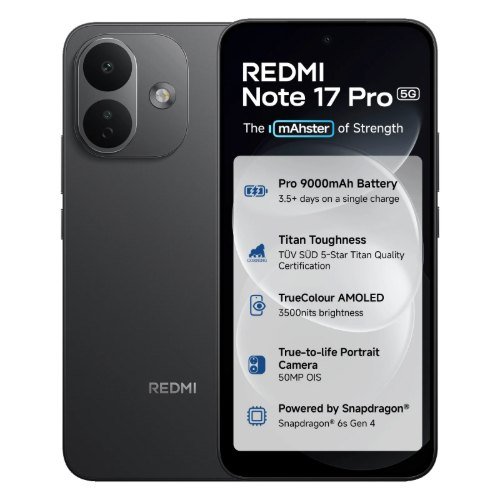
Launched in September 2026, the Note 17 Pro is built around one headline feature: a 9,000mAh battery, which is enormous for a phone. If you’re tired of charging every evening, this is the one to look at. It pairs a Snapdragon 6s Gen 4 chip with a 6.83-inch AMOLED screen and ships with the latest HyperOS 3 on Android 16.
| Chip | Qualcomm Snapdragon 6s Gen 4 |
| Display | 6.83-inch AMOLED, 120Hz |
| Battery | 9,000mAh, 67W charging |
| Software | HyperOS 3 (Android 16) |
Buy it if battery life is your number one priority. Skip it if you want gaming power: the Poco X8 Pro is faster and cheaper. If you want the biggest battery of all, the Redmi Note 17 Pro Max (from ₹49,999) has a 10,000mAh battery, 100W charging and a faster Snapdragon 6 Gen 5.
3. Redmi Note 15 Pro: best camera for the money
Launch price: ₹29,999 (8GB + 128GB) · ₹31,999 (8GB + 256GB)
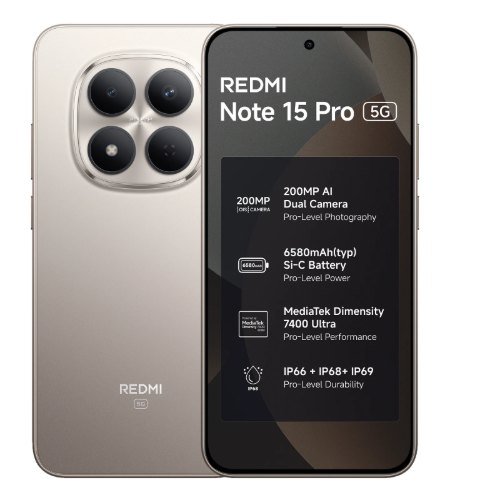
Launched in January 2026, the Note 15 Pro is now cheaper than the newer Note 17 Pro and still has the stronger camera on paper: a 200MP main sensor with optical image stabilisation. It’s also one of the toughest phones in its class, with IP66, IP68, IP69 and IP69K ratings and Gorilla Glass Victus 2.
| Chip | MediaTek Dimensity 7400-Ultra |
| Display | 6.83-inch 1.5K AMOLED, 120Hz, up to 3,200 nits |
| Cameras | 200MP main (OIS) + 8MP ultra-wide; 20MP selfie |
| Durability | IP66/IP68/IP69/IP69K, Gorilla Glass Victus 2 |
Buy it if you take lots of photos and want a durable phone around ₹30,000. Skip it if you play demanding games. For more power, the Note 15 Pro+ (from ₹37,999) adds a Snapdragon 7s Gen 4, a 6,500mAh battery and 100W charging.
4. Poco M8 5G: best under ₹25,000
Launch price: ₹21,999 (6GB + 128GB), up to ₹24,999 (8GB + 256GB)

The Poco M8 looks and feels more expensive than it is, thanks to a curved 6.77-inch AMOLED screen and a slim 7.35mm body. The Snapdragon 6 Gen 3 chip handles everyday use smoothly, and it’s rated IP65/IP66 against dust and water.
| Chip | Qualcomm Snapdragon 6 Gen 3 |
| Display | 6.77-inch curved AMOLED, 120Hz, up to 3,200 nits |
| Battery | 5,520mAh, 45W charging (charger in the box) |
| Camera | 50MP main |
Buy it if you want a premium-looking everyday phone without spending ₹30,000. Skip it if you need all-day-plus battery: its 5,520mAh battery is smaller than most 2026 rivals.
5. Redmi A7 Pro 5G: best budget 5G phone
Launch price: ₹11,499 (4GB + 64GB) · ₹12,499 (4GB + 128GB)
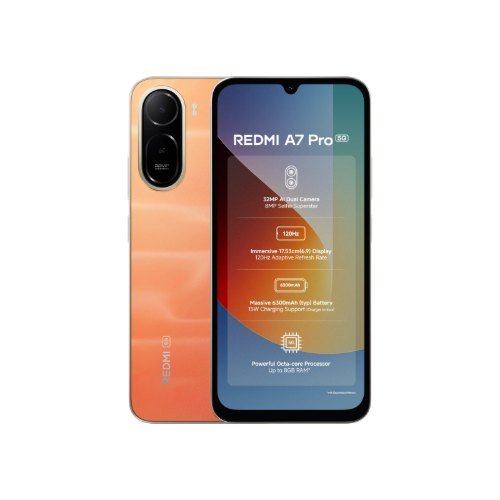
The first “Pro” model in Redmi’s entry-level A series is a sensible pick for students, parents or a second phone. You get a big 6.9-inch 120Hz screen, a 6,300mAh battery and, unusually at this price, a promise of four Android upgrades.
| Chip | Unisoc T8300 |
| Display | 6.9-inch HD+ LCD, 120Hz |
| Battery | 6,300mAh |
| Camera | 32MP main; 8MP selfie |
| Software | HyperOS 3 (Android 16), 4 OS upgrades |
Buy it if you need a reliable, long-lasting basic 5G phone. Skip it if you care about cameras or gaming; spend a bit more on the Poco M8.
6. Xiaomi 17: best flagship
Launch price: ₹89,999 (12GB + 256GB) · ₹99,999 (12GB + 512GB)
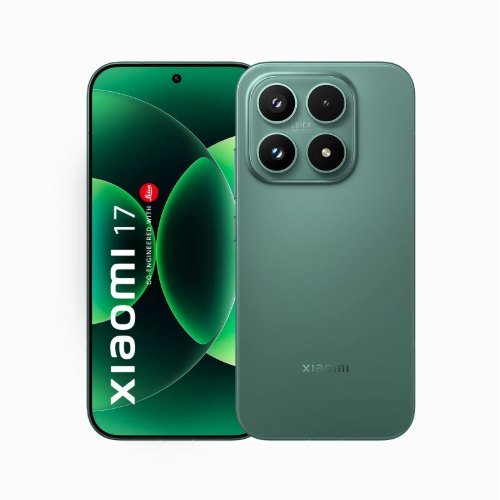
Xiaomi’s 2026 flagship uses Qualcomm’s top Snapdragon 8 Elite Gen 5 chip, Leica-tuned cameras and a compact 6.3-inch LTPO OLED screen. It’s a genuinely premium phone, but it costs about ₹24,000 more than the Xiaomi 15 did at launch, which puts it head-to-head with Samsung, Vivo and OnePlus flagships.
| Chip | Qualcomm Snapdragon 8 Elite Gen 5 |
| Display | 6.3-inch 1.5K LTPO OLED, 1–120Hz |
| Camera | 50MP Leica main camera system |
| Charging | 100W wired |
Buy it if you want a compact flagship and like Leica’s photo style. Skip it if value matters: the Poco X8 Pro does most things well for about a third of the price. Photography enthusiasts can step up to the Xiaomi 17 Ultra (₹1,39,999).
Side by side
| Phone | From | Chip | Battery | Best for |
|---|---|---|---|---|
| Redmi A7 Pro 5G | ₹11,499 | Unisoc T8300 | 6,300mAh | Budget |
| Poco M8 5G | ₹21,999 | Snapdragon 6 Gen 3 | 5,520mAh | Design |
| Redmi Note 15 Pro | ₹29,999 | Dimensity 7400-Ultra | n/a* | Camera |
| Poco X8 Pro | ₹32,999 | Dimensity 8500-Ultra | 6,500mAh | Performance |
| Redmi Note 17 Pro | ₹36,999 | Snapdragon 6s Gen 4 | 9,000mAh | Battery |
| Xiaomi 17 | ₹89,999 | Snapdragon 8 Elite Gen 5 | n/a* | Flagship |
Before you buy: 4 tips
- Check the live price. Launch prices often drop within a few months, and bank offers can cut ₹1,000–₹3,000 more.
- Look at update promises. Phones like the Poco X8 Pro and Redmi A7 Pro promise four Android upgrades, so they’ll stay safe and current for longer.
- Don’t pay for storage you won’t use. 128GB is enough for most people; 256GB makes sense if you shoot lots of video.
- Compare across brands. Xiaomi isn’t always cheapest any more; check rivals from Samsung, Vivo, Realme and OnePlus at the same price.
Frequently asked questions
Which is the best Xiaomi phone to buy in 2026?
For most people, the Poco X8 Pro offers the best balance of speed, screen, battery and price. If battery life matters most, choose the Redmi Note 17 Pro.
Are Redmi and Poco phones made by Xiaomi?
Yes. Redmi and Poco are both Xiaomi brands. They use the same HyperOS software; Poco usually focuses on performance per rupee, while Redmi covers the mass market.
Why are Xiaomi phones more expensive in 2026?
Rising memory-chip prices pushed up the cost of smartphones across brands in 2026. The Xiaomi 17, for example, launched at ₹89,999, about ₹24,000 more than the Xiaomi 15.
What is the cheapest 5G Xiaomi phone worth buying?
The Redmi A7 Pro 5G, which launched at ₹11,499 with a 6,300mAh battery and four Android upgrades.
Sources
- Poco X8 Pro: FoneArena, Digit, Beebom
- Redmi Note 17 Pro / Pro Max: Business Today, Digit
- Redmi Note 15 Pro / Pro+: Digit, Beebom, Business Today
- Poco M8 5G: FoneArena, Free Press Journal
- Redmi A7 Pro 5G: 91mobiles, Beebom
- Xiaomi 17 / 17 Ultra: 91mobiles, FoneArena, Digit
Prices and availability change often. Spotted something out of date? Tell us and we’ll update it.
Discover more from Khabar Mitra
Subscribe to get the latest posts sent to your email.